Acrow Press Room : Article
Modular
Bridge Noses Its Way Across River
Paul Fournier
7/12/99
New England Construction
Acrow Panel Bridge is Launched across Nashua River in Groton, Mass.
to bypass bridge work on busy Route 119.The replacement of a
badly deteriorated river bridge on a busy state highway in Groton,
Mass., has been expedited by the speedy assembly and launching of a
temporary bypass bridge.
Assembled in less than
six weeks by general contractor B. & E. Construction of Stoughton,
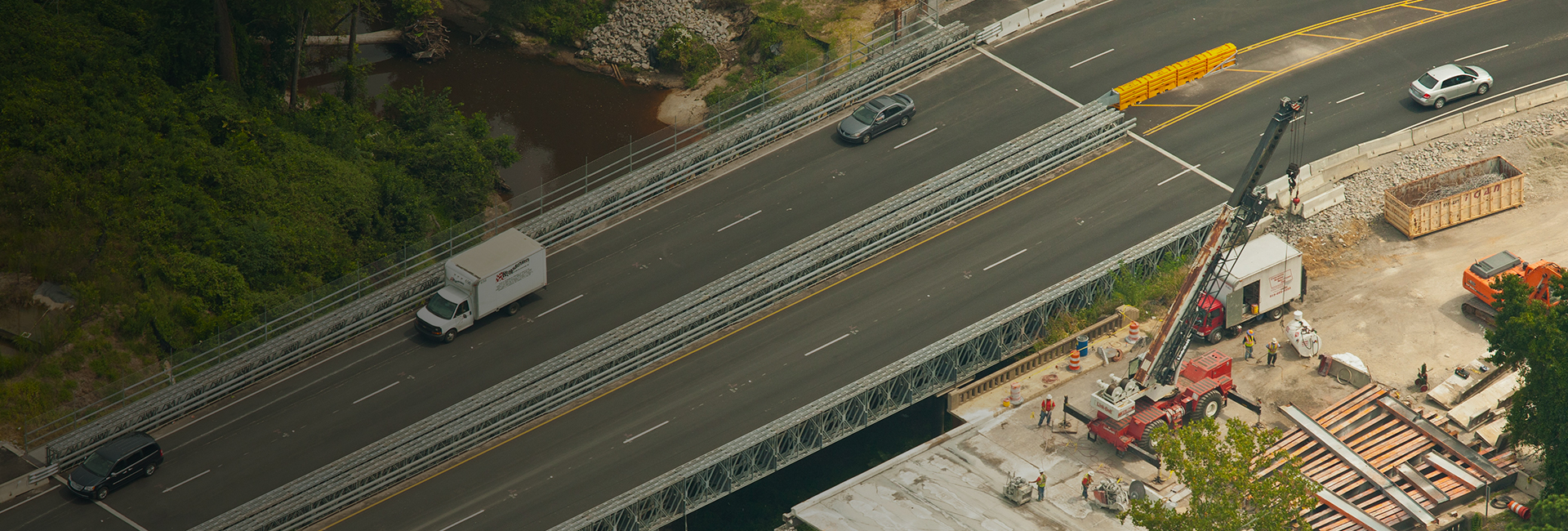
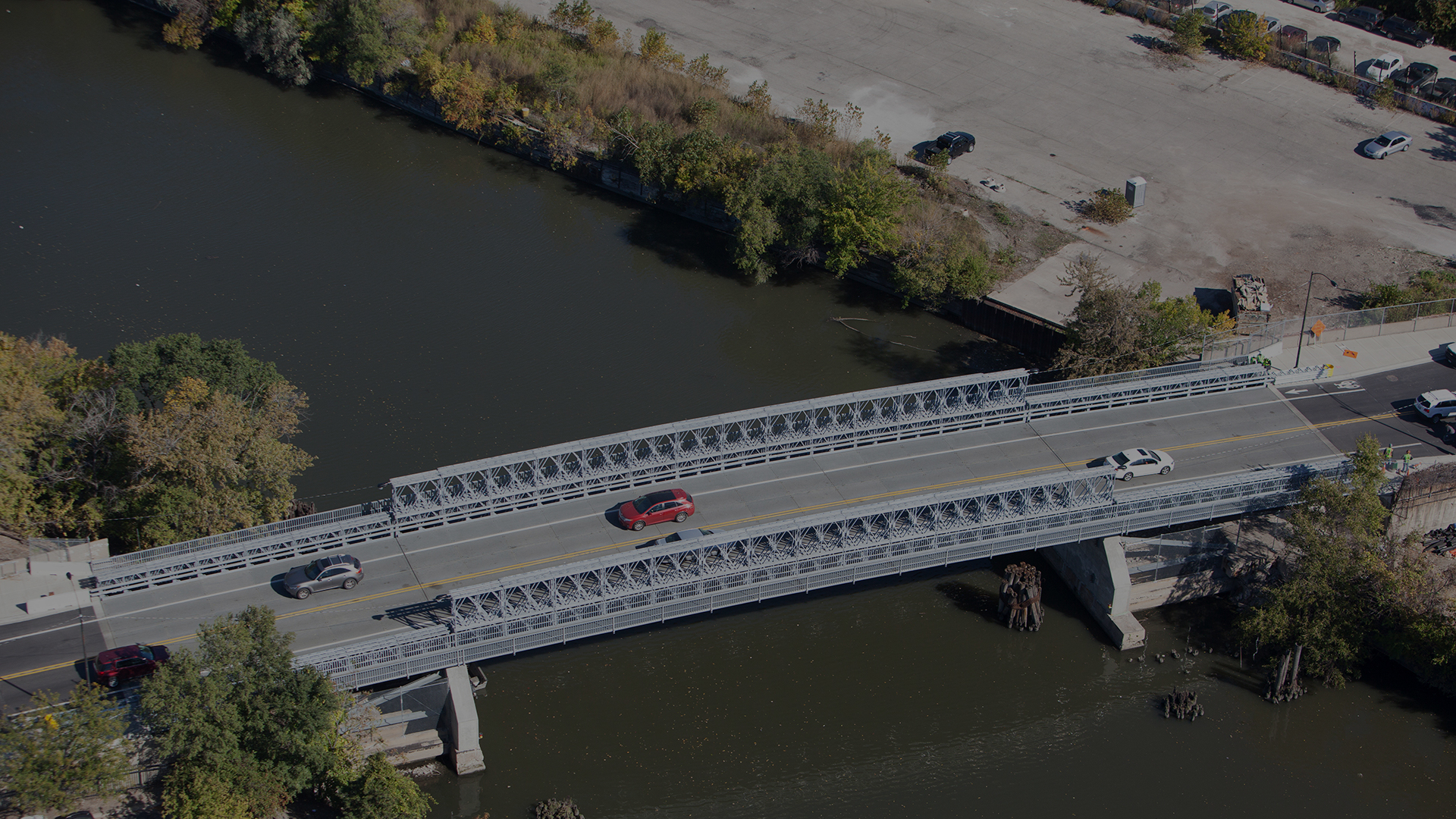
Mass., the 250-foot-long Acrow Panel Bridge was built to carry two lanes
of Route 119 traffic over the Nashua River between Groton and Pepperell
in the north central part of the state.
B. & E. has a
$1.9-million contract with the Massachusetts Highway Department to
replace a 68-year-old concrete bridge battered by some of the heaviest
commuter traffic in this part of the state. Route 119 is a major artery
linking bedroom communities in North central Massachusetts and
southeastern New Hampshire with Interstate 495 in Littleton.
The Stoughton contractor
is demolishing the old bridge and constructing new concrete hammerhead
pile caps on 42 existing concrete piles. Atop this crews will build a
new steel-framed structure with a concrete deck.
Since the replacement
bridge is to be about the same width as the existing - 30 feet plus
sidewalk - it was necessary to construct a bypass bridge and approaches
to accommodate detour traffic while work proceeds.
Manufactured by Acrow
Corporation of America, headquartered in Carlsdadt, N.J., the temporary
bridge is a modular system descended from the original Bailey Bridge
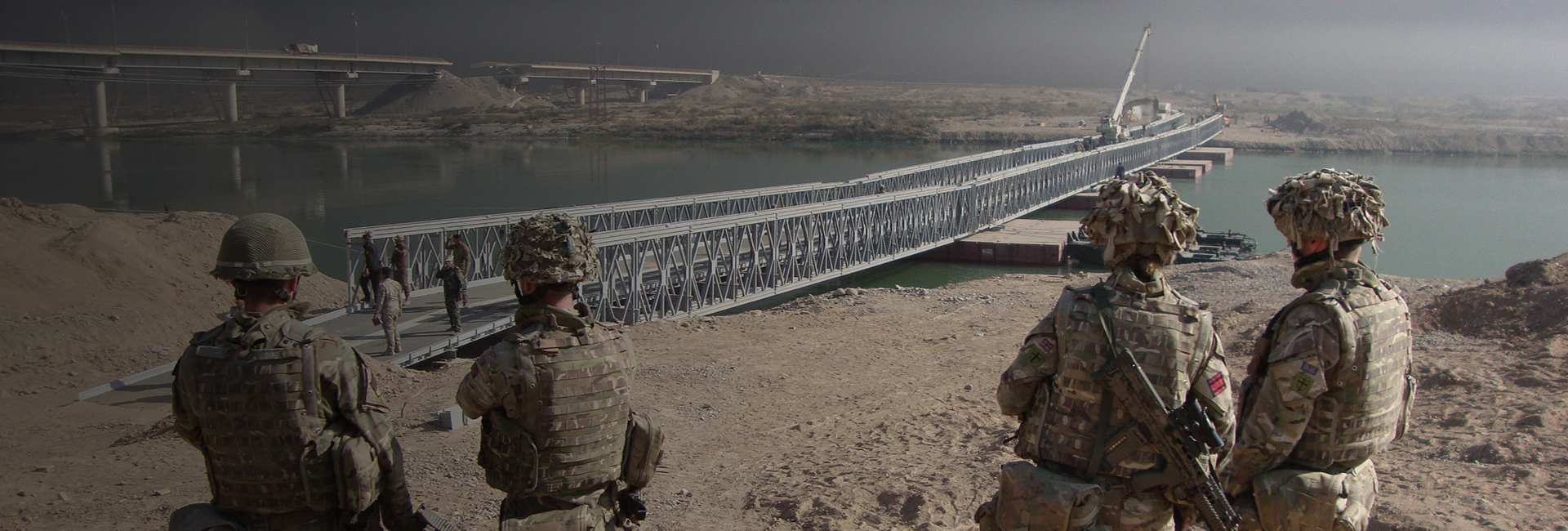
invented early in World War II. The Bailey Bridge was a quickly
assembled, high-strength replacement for damaged or destroyed bridges.
It could carry tanks and other heavy military equipment, and yet
assembled by soldiers using hand tools.
According to the
manufacturer, the trusses of the modern Panel Bridge are substantially
lighter and stronger than those of the original Bailey. In addition, the
system employs orthotropic steel deck panels that distribute loads more
efficiently across the width of the bridge.
Matt
Hummel, Acrow's project engineer for the Groton bridge, described it as
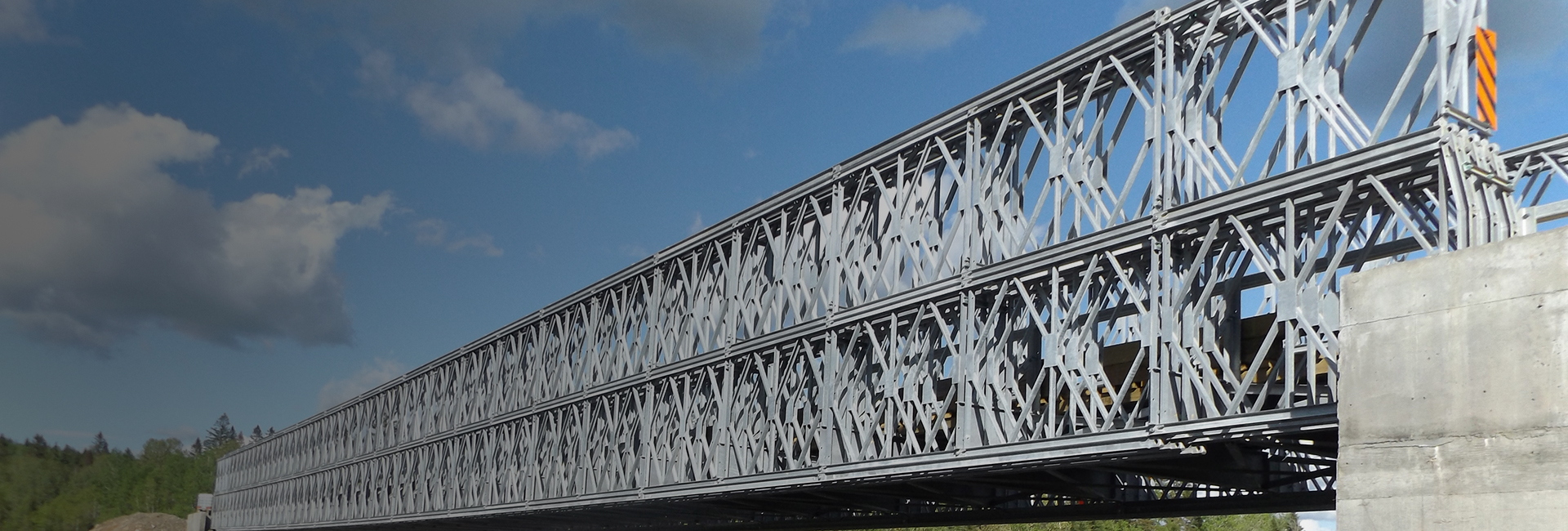
a 24-foot-wide, Triple Double Reinforced 3 Heavy Duty structure,
designed to carry two lanes of HS20 loading. The system assembled from
three principal components: 1-foot by 7-foot truss panels, floor beams,
and 10-foot-long orthotropic steel deck panels coated with an ant-skid
epoxy / fine aggregate material. Hummell said the structure required
approximately 530,000 pounds of hot-dipped galvanized steel which was
shipped to the job on seven flat-bed semi-trailers. This included the
steel for both the 250-foot main bridge and a 170-foot-long launching
nose.
The bridges are designed
to be assembled at the job site then positioned in a number of ways. For
example, they can be rolled into place in full cantilever from one side
of the gap to be spanned, lifted into place with a crane, or sometimes,
if a bridge is to span water, it can be floated into place. In Groton,
the choice was made to assemble a launching nose then roll the structure
in full cantilever across the river. Afterward the launching nose was
removed.
B. & E. started work
at the site in March, under the supervision of Glen Barrows, job
superintendent. The Acrow Bridge System was shipped to the job on April
1, according to Acrow's Tom Dabb, area sales manager, who represented
the manufacturer at the site. Union laborers from Locals 7, 11 and 57
assembled the structure according to Gary Esteves, the contractor's
foreman. Most of the work was done by hand, with an assist from a
hydraulic Pettibone Multikrane.
Crews assembled the
launching nose first, then began piecing together the main bridge. As
segments of the main bridge were added, the structure was rolled out
over the river by a Cat excavator.
By mid-May, the bridge
was finished and in place. The contractor then worked on the approaches
for the detour. On June 4, subcontractor Middlesex Paving of Littleton,
Mass., completed paving approaches, readying the temporary bypass - just
nine weeks after Acrow had shipped the components from its New Jersey
Plant.

See More Photos:
1
|
2
|
3
<<Return
To Top>> |